
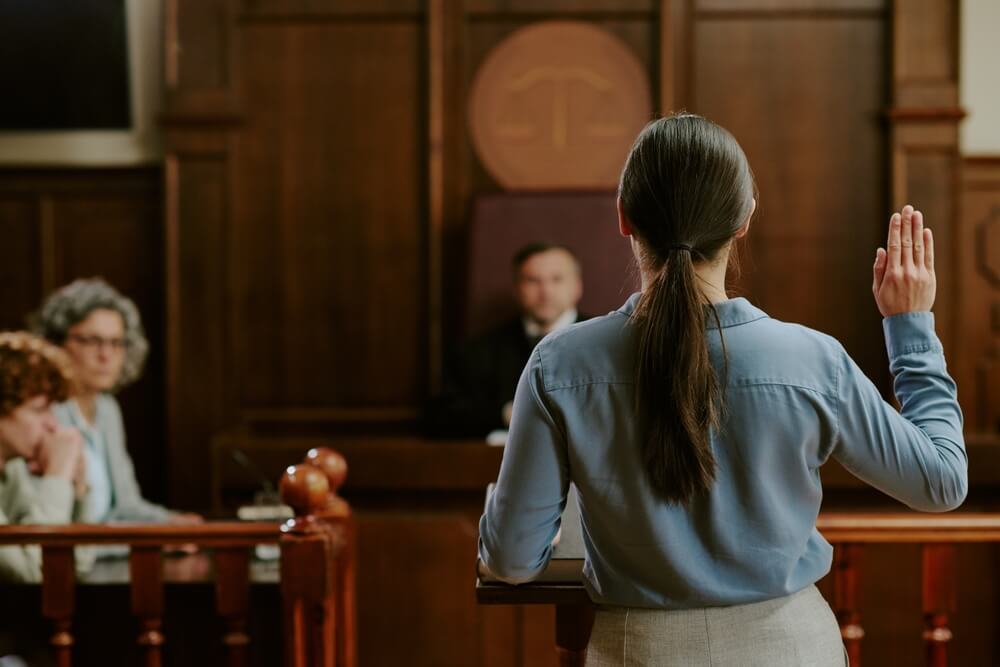
How Can Inconsistencies in Testimony Affect a Title IX Case?
A student receives an email from the Title IX Coordinator, and immediately, their entire academic future is placed in jeopardy. Facing a university disciplinary proceeding is terrifying, especially when the allegations describe an event drastically different from what actually occurred. The fear intensifies when a student realizes the university process does not mirror the strict constitutional protections found in a criminal courtroom. Instead, campus proceedings often rely heavily on witness statements, creating a highly stressful environment where it feels like one person’s word against another.
When hard physical evidence is scarce, the outcome of an investigation hinges almost entirely on witness credibility. Evaluating who is telling the truth requires a meticulous breakdown of every statement made during the investigative phase. Finding the gaps, shifting timelines, and contradictory details in the opposing party’s narrative is the most effective way to dismantle false allegations.
Why Is Credibility the Central Issue in Most Title IX Cases?
Because Title IX cases frequently occur in private settings without independent witnesses, the hearing officer must determine responsibility based primarily on witness credibility. An individual whose story remains highly consistent across multiple interviews is generally deemed more credible than someone whose timeline or facts frequently shift.
Campus misconduct allegations rarely happen in crowded, well-lit spaces with dozens of neutral observers. Instead, these incidents typically take place behind closed doors—at an off-campus apartment, inside a residence hall, or following a private gathering. Without security camera footage capturing the event or bystanders who can definitively confirm what happened, the university must rely on the statements provided by the reporting and responding parties.
Evaluating those statements goes beyond simply deciding who sounds more believable. A hearing officer looks for logical cohesion. If an accuser provides a specific sequence of events on a Tuesday, they must be able to recall that same sequence of events when interviewed a month later. When the details begin to change—when a small disagreement suddenly evolves into a dramatic physical altercation in subsequent retellings—the overall reliability of the narrative completely fractures. Exposing these shifting details forces the hearing panel to question the validity of the entire complaint.
How Does Auburn University Handle Title IX Investigations?
When a formal complaint is filed, Auburn University’s Office of Equal Opportunity Compliance appoints an investigator to interview all involved parties. This investigator gathers text messages, security footage, and witness statements to compile a Final Investigative Report that is ultimately reviewed during a live virtual hearing.
The administrative machinery begins moving the moment the university receives a report. The institution issues a Notice of Investigation detailing the specific conduct code violations the student is accused of committing. Auburn University operates under broad jurisdiction, meaning an incident at a local entertainment venue or a private house party in Lee County will be scrutinized with the same intensity as an event occurring directly on campus.
The appointed investigator’s job is to collect information, not to advocate for either side. They conduct multiple rounds of interviews, pressing students for granular details about their movements, conversations, and state of mind. Throughout this phase, the investigator requests specific categories of evidence:
- Time-stamped digital communications between the parties prior to and following the alleged incident.
- Security camera footage from downtown Auburn establishments, campus buildings, or apartment complexes.
- Statements from secondary witnesses, such as roommates or friends who interacted with the parties that evening.
- Electronic transaction records, including Uber receipts or Venmo payments, to verify locations and timelines.
All of this information is synthesized into a comprehensive preliminary report. Both parties are given an opportunity to review this draft and submit written responses before the final version is forwarded to the hearing officer. This review period is critical for identifying exactly where the opposing party’s story has changed.
What Happens If a Witness Changes Their Story During the Investigation?
If a witness provides statements to the university investigator that contradict their earlier accounts, it creates a documented inconsistency. A skilled legal advisor will highlight these shifting narratives to demonstrate that the testimony is unreliable, significantly weakening the allegations against the accused student.
Memory is highly fallible, especially when alcohol is involved or when weeks have passed since an incident. It is not uncommon for a witness to panic during an initial interview and provide a rushed, inaccurate account. However, when a reporting party fundamentally alters the core facts of their allegation, it raises immediate red flags regarding their motivation and honesty.
For example, an accuser might initially tell a residence assistant that a physical encounter was entirely non-consensual from the beginning. Weeks later, during a formal interview with the Office of Equal Opportunity Compliance, they might state that the encounter began consensually but consent was withdrawn midway through. This is a massive factual shift.
A skilled attorney tracks these variations meticulously, ensuring the hearing officer sees exactly how the narrative has evolved. When an accuser cannot keep their story straight, the university cannot confidently rely on their testimony to impose life-altering academic sanctions.
How Does Cross-Examination Expose Inconsistencies at a Live Hearing?
During a live Title IX hearing, your chosen advisor conducts real-time cross-examination to test the accuracy of opposing testimony. By directly comparing a witness’s live statements against their previous text messages, police reports, or written statements, the advisor can expose critical gaps and contradictions.
The live hearing is the most pivotal moment in the entire disciplinary process. Under Title IX federal regulations, accused students have the fundamental right to cross-examine their accuser and any supporting witnesses. However, the student is not permitted to ask these questions directly. The cross-examination must be conducted orally and in real time by the student’s advisor of choice. This procedural safeguard ensures that testimony is vigorously tested without forcing direct confrontation between the parties.
Effective cross-examination is an art form. It requires locking a witness into a specific timeline and systematically dismantling their answers using the evidence gathered during the investigation. If a witness claims they were trapped in an apartment for hours, the advisor will present a text message sent by that same witness during that exact timeframe asking a friend to bring them food.
Pinning down these contradictions in front of the hearing officer destroys the credibility of the allegations. It demonstrates that the accuser’s memory is either severely compromised or intentionally deceptive.
Can Digital Evidence Contradict Witness Testimony?
Digital evidence frequently contradicts verbal testimony in campus misconduct cases. Time-stamped Uber receipts, background audio from social media videos, and location data can definitively prove that an accuser’s stated timeline is physically impossible, destroying their overall credibility before the hearing officer.
Modern campus disputes leave a massive digital footprint. We no longer have to rely purely on human memory to reconstruct an evening. A student might claim they were assaulted near Toomer’s Corner at midnight, but digital records can objectively prove they were miles away at that exact moment. When a witness’s verbal testimony collides with hard digital data, the digital data always wins.
Preserving and recovering this information is a central component of a strong defense strategy. We aggressively hunt for the electronic breadcrumbs that prove our client’s innocence. This includes analyzing:
- Rideshare data establishing precise pickup and drop-off coordinates, contradicting claims about how a student traveled home.
- Location tracking data from smartphones proving a student never visited the apartment complex where the incident allegedly occurred.
- CashApp or Venmo transactions with time stamps that place the parties at specific bars or restaurants at specific times.
- Background noise or visible landmarks in Snapchat videos that contradict statements regarding the atmosphere or location of a gathering.
How Do Text Messages and Social Media Impact Credibility?
Text messages sent immediately after an alleged incident often provide the most accurate reflection of a student’s state of mind. If a complainant testifies that they were terrified, but their immediate text messages to the accused show casual or affectionate language, the hearing officer must weigh that glaring inconsistency.
The way individuals communicate immediately following an event often reveals the truth far better than a formal statement drafted weeks later. Investigators heavily scrutinize the tone and frequency of text messages. If an accuser claims they were traumatized by a non-consensual encounter, yet they sent the accused a casual meme or asked to hang out again the following afternoon, that behavior fundamentally contradicts their formal allegations.
Unfortunately, students often panic and delete these digital records out of fear or embarrassment. Deleting a text thread is a severe mistake. It looks inherently guilty and deprives the defense team of the exculpatory evidence needed to prove the interactions were mutually agreeable. You must preserve all communications across all platforms, including direct messages on Instagram or Snapchat, to ensure the hearing officer sees the full, unedited context of the relationship.
What Is the Preponderance of the Evidence Standard at Auburn?
Auburn University uses the preponderance of the evidence standard for Title IX violations, meaning the hearing officer only needs to believe it is more likely than not that the misconduct occurred. Exposing inconsistencies in the accuser’s testimony is the most effective way to prevent the university from meeting this low evidentiary threshold.
Many students mistakenly believe that the university must prove their guilt beyond a reasonable doubt. That high legal threshold only applies in criminal courtrooms. The educational administrative system operates on a drastically lower standard. The preponderance of the evidence simply means ‘more likely than not.’ If a hearing panel decides there is a more than 50 percent chance that a student violated the code of conduct, they will issue a finding of responsibility and impose sanctions.
Because this standard is so easily met, you cannot afford to leave any contradictory testimony unchallenged. If a hearing officer is leaning toward believing the accuser, exposing just one or two major flaws in their timeline can tip the scales back in your favor. It requires a relentless focus on the facts and a refusal to let vague or shifting answers stand unchallenged.
Can Inconsistent Testimony Help Defend Against Parallel Criminal Charges?
When campus allegations overlap with criminal charges, sworn testimony from a Title IX hearing can be subpoenaed by the Lee County District Attorney. If an accuser provides inconsistent answers under cross-examination at the university level, an experienced defense attorney can use those transcripts to undermine the criminal prosecution.
Title IX incidents often trigger a two-front battle. While the university conducts its administrative review, the Auburn Police Department may launch a parallel criminal investigation. These two systems operate independently, but the evidence generated in one arena frequently bleeds into the other. Statements made during a campus interview are not shielded by confidentiality; they can be obtained by law enforcement through a subpoena. The Lee County Circuit Court routinely handles criminal cases that began as university disciplinary complaints.
This dual-track nature makes cross-examination at the university level even more vital. If we force a reporting party to commit to a specific, flawed timeline during the Title IX hearing, and they later attempt to change that timeline while testifying before a criminal jury, we can use the university transcripts to impeach their credibility in court.
Conversely, any statements the accused student makes to university investigators can be used against them by the District Attorney. Coordinating a unified defense strategy that protects you in both the administrative hearing and the criminal courtroom is absolutely essential.
Why Should You Never Rely on a University-Appointed Advisor for Cross-Examination?
University-appointed advisors are faculty or staff members who lack formal legal training in evidence analysis and cross-examination techniques. Relying on an untrained university employee to expose subtle inconsistencies in testimony puts your academic future and permanent disciplinary record at severe risk.
The university is required by law to offer you an advisor if you do not select one yourself. These appointed individuals are typically well-meaning professors or administrative staff members. However, they are entirely unequipped to handle complex litigation tactics. Cross-examination is a highly technical skill honed over years of courtroom experience. A chemistry professor does not know how to lay the foundation to impeach a witness with a prior inconsistent statement.
Furthermore, conversations with a university-appointed advisor lack attorney-client privilege. They are employees of the very institution investigating you. If you admit a damaging detail to a staff advisor, they may be obligated to report it to the Title IX Coordinator. Retaining private legal counsel ensures that your communications remain strictly confidential and that your cross-examination is conducted by a professional trained to protect your rights.
How Can an Experienced Legal Team Protect Your Future?
A Title IX allegation threatens your education, your career prospects, and potentially your freedom. You cannot afford to face these highly structured proceedings alone, nor should you trust your future to an untrained university advisor. At Vaughn Defense, we understand exactly how to analyze investigative reports, isolate contradictory witness statements, and conduct aggressive cross-examinations that expose the truth.
Our skilled attorneys manage every aspect of the disciplinary process for Auburn University students, ensuring your rights are fiercely protected. We conduct our own independent investigations to recover the digital evidence necessary to prove your innocence and prevent the university from meeting its preponderance of the evidence standard. If you or your child is facing an investigation or parallel criminal charges in Lee County, you need immediate legal representation.
Contact Artie Vaughn at Vaughn Defense today to schedule a confidential consultation and begin building a strong, unified defense strategy.
Frequently Asked Questions
Can I refuse to answer questions during an Auburn Title IX hearing?
Yes, you have the right to remain silent during a university hearing. However, unlike in a criminal courtroom, the university hearing panel is permitted to draw a negative inference from your silence when determining responsibility under the preponderance of the evidence standard.
What happens if the accuser refuses to be cross-examined?
Under current federal guidance, if a party or witness refuses to submit to cross-examination at the live hearing, the decision-maker must carefully weigh how to evaluate their prior statements. An experienced advisor will vigorously argue that untested statements should be deemed entirely unreliable.
Can I submit new digital evidence during the live hearing?
Generally, no. The university requires all evidence to be submitted during the designated investigative phase so it can be included in the final report. Attempting to introduce new text messages or receipts at the last minute is usually prohibited by procedural rules.
How long does an Auburn University Title IX investigation take?
The university aims to conclude the entire process, from the initial Notice of Investigation to the final hearing decision, within 60 to 90 days. However, delays are common if the case involves complex evidence or a parallel criminal investigation by local law enforcement.
Can I appeal the hearing officer’s decision if I find new inconsistencies?
Appeals are strictly limited to specific grounds, such as procedural irregularities, demonstrated bias by the investigator, or the discovery of new evidence that was not reasonably available during the hearing. You cannot appeal simply because you disagree with how the officer weighed the existing testimony.
Will my Title IX disciplinary record be shared with the Auburn Police Department?
While the university generally protects student records under privacy laws, the Auburn Police Department and the Lee County District Attorney can obtain your complete disciplinary file, including hearing transcripts and evidence, by issuing a formal legal subpoena.



Leave a Reply
Want to join the discussion?Feel free to contribute!