
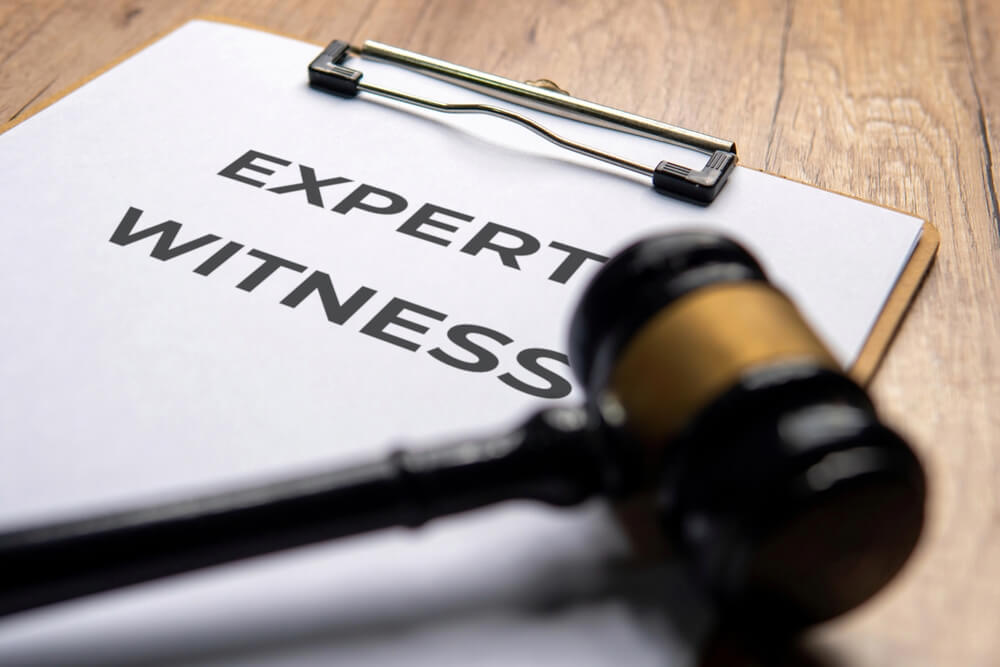
The Role of Expert Witnesses in Auburn Title IX Defense Strategies
A notification from the Auburn University Title IX Office can dismantle a student’s future in an instant. One moment, you are studying for finals at the RBD Library or meeting friends near Toomer’s Corner; the next, you are facing an investigation that could lead to expulsion, a permanent transcript notation, and the destruction of career prospects before they even begin.
For many students and parents in Lee County, the Title IX process is confusing and terrifying. Unlike a criminal trial at the Justice Center in Opelika, university hearings operate under a lower standard of proof, “preponderance of the evidence.” This means a hearing panel only needs to believe it is more likely than not (50.1%) that a violation occurred to find a student responsible.
In this high-stakes environment where the margin for error is razor-thin, the testimony of expert witnesses often dictates the outcome. While the university may provide an advisor, they rarely have the resources or strategic foresight to engage forensic specialists, toxicologists, or digital analysts. Building a robust defense requires more than just telling your side of the story; it requires scientific, objective evidence that challenges the narrative presented against you.
The Critical Difference Between Fact Witnesses and Expert Witnesses
Most students involved in a Title IX investigation at Auburn focus heavily on “fact witnesses” roommates, fraternity brothers, or friends who were present at the Skybar or a house party on Magnolia Avenue. While these accounts are important, they are often clouded by alcohol, bias, or the chaotic nature of the social environment.
Expert witnesses serve a different function. They do not rely on memory or loyalty. Instead, they analyze objective data to provide a professional opinion that can validate a defense or dismantle an accuser’s timeline. In a system where hearsay is often admissible and procedural protections are fewer than in criminal court, an expert’s objective report can be the anchor of credibility a respondent needs.
How Do Expert Witnesses Impact an Auburn Title IX Hearing?
Expert witnesses provide objective, scientific analysis that can refute subjective claims, validate timelines, and clarify ambiguous evidence regarding consent or incapacitation.
In an Auburn Title IX hearing, the difference between “responsible” and “not responsible” often hangs on the interpretation of a text message, a toxicology report, or a medical exam. An expert witness does not advocate for the student personally; rather, they educate the hearing panel or decision-maker on complex technical issues.
For example, a digital forensics expert can recover deleted Snapchat metadata to prove a conversation happened differently than alleged, while a toxicologist can explain why a specific Blood Alcohol Content (BAC) does not automatically equal incapacitation under university policy. Their testimony shifts the focus from “he said, she said” to verifiable facts.
- Credibility Assessment: Experts can highlight inconsistencies in statements that a layperson might miss.
- Objective Analysis: They provide a neutral interpretation of physical or digital evidence.
- Policy Clarification: Experts can contextualize evidence within the specific definitions used by Auburn University’s Title IX policy.
Digital Forensics: The Silent Witness in Student Conduct Cases
In the modern college environment, the majority of interactions leave a digital footprint. Allegations often stem from incidents that occurred after hours of communication via text, Snapchat, Instagram, or Tinder. When an investigation begins, the university investigator will request screenshots, but screenshots can be manipulated, taken out of context, or selectively edited.
A digital forensics expert goes deeper than a screenshot. By analyzing the raw data of a smartphone, these professionals can retrieve:
- Deleted Communications: Recovering messages that provide critical context to the relationship between the parties.
- Geolocation Data: Using GPS data from photos or apps to prove a student’s location, potentially disproving an allegation that they were present at a specific dorm or apartment complex at a specific time.
- Timestamp Verification: establishing the exact sequence of events, which is often crucial when consent is disputed based on timelines.
For example, if a complainant alleges they were incapacitated and unable to consent at 1:00 AM, but digital data shows them sending coherent, typed messages or posting active social media updates at 1:15 AM, a digital forensics expert can present this data to the hearing panel. This objective evidence is difficult to refute with verbal testimony alone.
Toxicology and the “Incapacitation” Debate
The most common point of contention in Auburn Title IX cases involves alcohol or drugs. The university’s policy distinguishes between being intoxicated (under the influence) and being incapacitated (unable to understand the nature of the act). This distinction is vital, yet it is often misunderstood by hearing panelists who may not have legal or medical training.
A forensic toxicologist can be instrumental in these cases. If there is data regarding the amount of alcohol consumed perhaps from a bar tab on College Street or witness statements about the number of drinks a toxicologist can perform a retrograde extrapolation. This calculation estimates what a person’s BAC would have been at the time of the alleged incident.
Furthermore, these experts can explain the physiological effects of alcohol to the panel. They can clarify that a “blackout” (amnesia) is not the same as passing out (unconsciousness). A person in a blackout state can still walk, talk, and appear to be functioning normally to an observer. If the respondent reasonably believed the other party was capable of consenting based on their actions, a toxicologist’s testimony about the science of blackouts can be a powerful component of the defense strategy.
Can I Use a Private Investigator for an Auburn University Title IX Case?
Yes, a private investigator can locate witnesses, secure off-campus surveillance footage, and gather background information that university investigators may overlook or lack the jurisdiction to obtain.
University investigators are often limited in their reach. They typically focus on interviewing students and reviewing evidence provided to them. They rarely scour off-campus locations for evidence. A private investigator working with your defense team can fill this gap. They might visit the apartment complex where the incident occurred to measure distances or check lighting conditions. They can track down former roommates or Uber drivers who might have observed the parties interacting earlier in the night. In Lee County, where many students live in off-campus housing developments that have their own security cameras, a private investigator acts quickly to send preservation letters to secure video footage before it is overwritten evidence that university officials might not even attempt to find.
- Witness Interviews: Locating and interviewing non-student witnesses who aren’t beholden to the university process.
- Scene Documentation: Photographing the location to challenge descriptions of the event (e.g., proving a door could not have been locked as described).
- Social Media Archiving: Preserving public social media posts from the accuser that may contradict their account before they are scrubbed.
The SANE Exam: Interpreting Medical Evidence
In cases involving allegations of sexual assault, a Sexual Assault Nurse Examiner (SANE) exam may have been performed, often at East Alabama Medical Center (EAMC). The SANE report is a medical document that details physical findings, toxicology results, and the patient’s narrative of the event.
These reports are powerful pieces of evidence, but they are not infallible. A medical expert witness for the defense can review the SANE report to identify inconsistencies. For instance, they might note that the physical findings are non-specific and could be caused by consensual activity rather than force. They can also analyze the toxicology results in the report to see if they align with the complainant’s description of their level of intoxication.
Without a defense expert to interpret this medical jargon, a hearing panel might assume that the mere existence of a SANE report is proof of guilt. A skilled medical review ensures that the panel understands exactly what the medical evidence does—and does not—prove.
Navigating Parallel Proceedings in Lee County
It is not uncommon for a student to face a Title IX investigation by Auburn University and a criminal investigation by the Auburn Police Division or the Lee County Sheriff’s Office for the same incident. This creates a dangerous “two-front war.”
Information shared in the Title IX process is not privileged. Statements made to a university investigator or during a hearing can potentially be subpoenaed by the District Attorney’s office and used in a future criminal trial. This is where the role of an advisor and legal counsel becomes paramount.
What Happens if Evidence in a Title IX Case Conflicts with the Police Report?
Conflicting evidence between a Title IX investigation and a police report can be leveraged to challenge the credibility of the accuser, but it also poses a risk if the student’s own statements differ.
When two investigations run parallel, inconsistencies inevitably arise. A complainant might tell a university investigator one version of events and tell the responding police officer another. These discrepancies are gold mines for defense strategies. An experienced attorney can use the police report (which is often a public record or discoverable) to cross-examine the complainant during the Title IX hearing (via the advisor). If the stories do not align on key details such as who provided the alcohol, the timeline of events, or the specific actions alleged it casts doubt on the reliability of the accusation. However, this sword cuts both ways; a respondent must be extremely consistent in their own accounts to avoid damaging their credibility in both the university and criminal systems.
- Impeachment: Using the police report to show the hearing panel that the accuser’s story has changed over time.
- Strategic Silence: In some cases, it may be necessary to limit what is shared in the university process to protect against criminal liability, a complex balance that requires legal guidance.
- Discovery Utilization: Police investigations often yield evidence (body cam footage, 911 calls) that the university investigator missed.
The Role of the Advisor in Cross-Examination
Current Title IX regulations and Auburn University policy acknowledge the right of both parties to have an advisor present during hearings. Crucially, this advisor is the person who conducts cross-examination. You cannot ask questions of the accuser directly; your advisor must do it for you.
This is where the value of a legal professional becomes clear. An advisor who is also a criminal defense attorney understands how to formulate questions that expose inconsistencies without being argumentative or violating the university’s rules of decorum. They know how to use the expert reports discussed above, digital forensics, toxicology, and medical reviews as the foundation for their questioning.
For example, if a digital forensics report shows the accuser sent a text at 2:00 AM saying “I’m having a great time,” but they testified they were incapacitated at 1:30 AM, the advisor can use that data point to respectfully but firmly challenge the narrative during the hearing. This targeted questioning, grounded in expert evidence, is often the deciding factor in the case.
Protecting Your Education and Your Future
A Title IX finding of responsibility is more than just a hurdle; it is a permanent mark that can prevent you from transferring schools, applying to graduate programs, or obtaining professional licenses. The university process moves fast, often concluding in weeks, whereas the criminal process can take months or years. You do not have the luxury of waiting to see how things play out. The inclusion of expert witnesses in a Title IX defense strategy changes the dynamic of the hearing. It moves the discussion from subjective storytelling to objective fact-finding.
Contact Vaughn Defense today at (334) 232-9392 for a confidential consultation. We understand the unique intersection of academic and criminal law in Lee County and can help you determine the best strategy to protect your rights and your future.


Leave a Reply
Want to join the discussion?Feel free to contribute!