
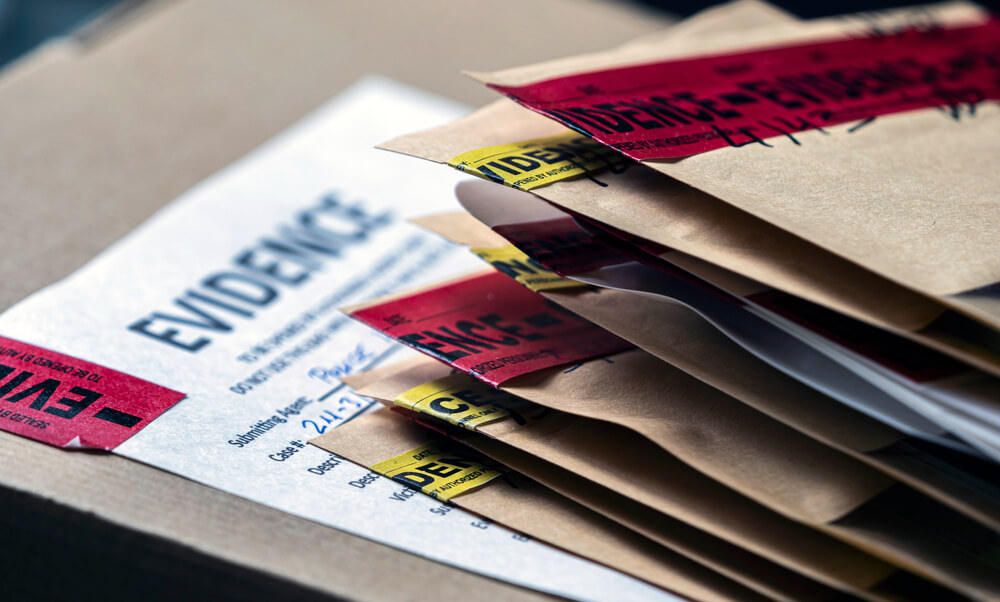
The Role of Forensic Evidence in Criminal Defense Cases
In courtrooms across Lee County, perhaps no evidence is presented with more authority than forensic science. Juries are often shown DNA matches, fingerprint comparisons, or ballistics reports, all of which seem to offer a definitive, scientific link between a defendant and a crime. This “CSI effect” has created a powerful expectation that science can solve cases with unerring precision. For the prosecution, this evidence often forms the bedrock of their case, presented as objective, irrefutable fact.
However, scientific evidence is not infallible. It is a product of human collection, analysis, and interpretation. Every step, from the crime scene in Auburn to the state lab, is an opportunity for contamination, error, or misinterpretation.
What is Forensic Evidence?
“Forensic” simply means “relating to or used in a court of law.” Therefore, forensic evidence is any evidence derived from scientific methods that is intended to be used in a legal proceeding. It is a broad term that covers a vast range of disciplines, all designed to analyze physical traces left at a crime scene.
In an Auburn criminal case, this evidence is gathered by law enforcement, such as the Auburn Police Division or the Lee County Sheriff’s Office, and typically analyzed by technicians at a state facility like the Alabama Department of Forensic Sciences (ADFS). The resulting report is then used by the prosecution to support their theory of the crime.
How Do Prosecutors Use Forensic Evidence in Lee County Cases?
Prosecutors rely on forensic evidence to accomplish several key goals in building a case against a defendant. The perceived objectivity of science can be highly persuasive to a jury.
- Linking a Suspect to a Scene or Victim: This is the most common use. A DNA profile from blood at the scene matching the defendant, or a fingerprint found on a weapon, is powerful evidence.
- Establishing a Key Element of a Crime: A toxicology report showing a driver’s blood alcohol content (BAC) above the legal limit is used to prove the “under the influence” element of a DUI.
- Reconstructing the Crime: Blood spatter analysis might be used to show where individuals were standing during an assault, while ballistics can show the trajectory of a bullet.
- Corroborating or Disputing a Story: If a suspect claims self-defense, the presence or absence of gunshot residue (GSR) on their hands could be used to support or challenge their statement.
- Identifying a Substance: A lab test that confirms a seized powder is cocaine is a required piece of evidence in a drug trafficking or possession case.
What Are the Most Common Types of Forensic Evidence?
While television focuses on high-tech labs, the types of forensic evidence used in real-world Auburn cases vary widely. Each comes with its own set of procedures, standards, and potential weaknesses.
- DNA Analysis: This involves comparing genetic material (like blood, saliva, skin cells, or hair) found at a scene to a known sample from a suspect. It is often considered the gold standard, but the analysis of complex or mixed DNA samples can be highly subjective.
- Fingerprint Analysis: Examiners compare latent prints (invisible prints left by skin oils) from a surface with a suspect’s known prints. The comparison looks for unique points of similarity, but there is no universal standard for how many points are needed for a “match.”
- Digital Forensics: This is a rapidly growing field. It involves the recovery and analysis of data from computers, cell phones, GPS devices, and cloud accounts. Cell tower pings are often used to place a person in a general location.
- Ballistics and Firearms Analysis: This discipline involves matching shell casings or bullets found at a scene to a specific firearm. It also includes analyzing gunshot residue to determine if someone recently fired a weapon.
- Toxicology: This is the analysis of blood, urine, or breath to detect the presence and concentration of alcohol or drugs. It is a cornerstone of DUI and drug-related prosecutions.
- Trace Evidence: This is a broad category that includes microscopic evidence like fibers, paint chips, soil, or glass fragments. An examiner might try to link fibers from a suspect’s clothing to a victim’s home.
- Questioned Documents: This involves analyzing handwriting to determine the authenticity of a document, such as in a forgery or fraud case.
Why is Forensic Evidence Not Always Reliable?
The public perception of forensics as a perfect science is a dangerous myth. The reality is that “scientific” evidence is vulnerable to the same issues as any other human endeavor: mistakes, bias, and flawed methods.
Human Error
A lab analyst is just as capable of a mistake as anyone.
- Mislabeling: A sample from the defendant could be accidentally swapped with a sample from the victim.
- Data Entry Errors: Transposing numbers in a report can change a result entirely.
- Misinterpretation: An analyst may incorrectly interpret a complex data set, such-as a DNA sample containing material from three different people.
Contamination
Evidence is only as good as its integrity. Contamination can happen at any point:
- At the Scene: An officer or paramedic who is not careful can accidentally transfer their own DNA or fibers onto a piece of evidence.
- During Collection: Using a dirty tool or a non-sterile container can compromise a sample.
- In the Lab: Samples stored improperly or analyzed on a contaminated workstation can lead to false results.
Flawed or Subjective Scientific Foundations
Not all “forensic science” is equally scientific.
- Pattern-Matching Disciplines: Fields like bite mark analysis, firearms tool-mark matching, and even latent fingerprint comparison rely heavily on a human examiner’s subjective judgment. These are not objective measurements; they are opinions.
- Debunked Science: Bite mark analysis, once a staple in court, has been almost completely discredited. Countless wrongful convictions were based on “experts” matching a defendant’s teeth to a mark on a victim, a method now known to be unreliable.
Analyst Bias
Forensic analysts are often employed by the state and work closely with police and prosecutors.
- Confirmation Bias: If an analyst is told by police, “We think this is the guy,” they may unconsciously look for evidence that confirms that belief and ignore data that contradicts it.
- Pressure to “Get a Match”: In high-TAMU cases, analysts may feel pressured to produce a positive result for the prosecution.
Issues with the Crime Lab
The Alabama Department of Forensic Sciences, like any state lab, operates under real-world constraints.
- Backlogs: Overworked analysts and long backlogs can lead to rushed work and mistakes.
- Equipment: Lab equipment must be perfectly calibrated and maintained. A failure to do so can skew all results.
- Protocol: Labs have strict protocols for how to handle and test evidence. Any deviation from these protocols can invalidate the results.
What is the “Chain of Custody” and Why Does It Matter?
One of the most important principles in forensic science is the chain of custody. This is the official, chronological paper trail that documents the life of a piece of evidence.
A proper chain of custody log must show:
- Who collected the evidence.
- When and where it was collected.
- Who handled the evidence after collection.
- Where the evidence was stored at all times.
- When it was transferred to the lab.
- Who analyzed it, and when.
Why is this so important? A missing link, an unlogged transfer, or an unexplained gap in time breaks the chain. If the chain is broken, the prosecution cannot guarantee to the court that the evidence presented is the exact same evidence taken from the crime scene. It opens the door to arguments that the evidence was tampered with, contaminated, or planted.
For example, if a baggie of evidence is signed out of an Auburn police locker and not signed into the ADFS lab until two days later, with no record of where it was, a defense attorney will argue that the integrity of that evidence is compromised.
How Can a Defense Attorney Challenge Forensic Evidence?
When a criminal case in Lee County relies on forensic evidence, a knowledgeable defense lawyer has several avenues to challenge it. This is not about theatrics; it is about holding the prosecution and its analysts to the high scientific standards they claim to uphold.
Filing Pre-Trial Motions to Suppress
Before a jury ever sees the evidence, we can ask a judge to throw it out.
- Motion to Suppress (Fourth Amendment): If the evidence (like a blood sample or a cell phone) was seized without a valid search warrant or probable cause, it may be excluded as an unconstitutional search.
- Motion to Suppress (Chain of Custody): If we can demonstrate a significant break in the chain of custody, we can file a motion to suppress the evidence on the grounds that it is unreliable.
Challenging the Science Itself (The Daubert Standard)
Alabama law requires that scientific evidence meet a standard of reliability before it can be presented to a jury. This is known as the Daubert standard. Under this standard, a judge must act as a gatekeeper and determine if the expert’s testimony is based on scientifically valid principles.
We can file a motion asking for a Daubert hearing to argue that the prosecution’s evidence is not reliable science. This is especially effective against less-proven fields like handwriting analysis or when an analyst uses a new, unverified method.
Rigorous Cross-Examination of the State’s Analyst
During the trial, the state’s forensic analyst will testify as an expert witness. A thorough cross-examination is essential to revealing the weaknesses in their conclusions.
- Qualifications: Does the analyst have advanced degrees, or just on-the-job training?
- Proficiency: How many times have they performed this specific test? Have they ever made a mistake?
- Protocol: Can they confirm they followed every single step of the lab’s official manual?
- Certainty: We can challenge the language they use. Are they 100% certain, or is it a “match to a reasonable degree of scientific certainty?” We can expose the subjective nature of their opinion.
- Bias: We can ask about their communications with the prosecutor’s office or police to reveal any potential for confirmation bias.
Hiring an Independent Defense Expert
This is one of the most powerful tools in a defense attorney’s arsenal. We can hire our own highly qualified forensic scientist (e.g., a toxicologist, DNA analyst, or digital forensic examiner) to:
- Review the state’s report and data for errors.
- Re-test the evidence if possible.
- Provide counter-testimony at trial, explaining to the jury why the state’s conclusions are wrong, exaggerated, or only one of several possibilities.
What Should You Do if You Are Accused Based on Forensic Evidence?
Being told the police have “DNA” or “fingerprints” that link you to a crime is terrifying. It can make you feel like the case is already over. It is not. Here are the steps to take.
- Do Not Speak to Law Enforcement. Your first instinct will be to “explain” the evidence. (“Of course my fingerprints were there, I was there last week!”) You must resist this. You are under no obligation to help the police build their case against you. Anything you say can and will be used to lock in a theory of guilt.
- Politely Invoke Your Right to Remain Silent. State clearly, “I am going to remain silent, and I would like a lawyer.”
- Do Not Consent to a Search or Sample. Do not consent to a search of your car, home, or phone. Do not voluntarily give a DNA (cheek swab) or fingerprint sample. Make the police get a warrant.
- Do Not Alter or Destroy Anything. Do not delete texts, wipe your computer, or clean your car. This can be viewed as “consciousness of guilt” and lead to separate charges for destroying evidence.
- Contact a Criminal Defense Attorney Immediately. The sooner an attorney is involved, the better. A lawyer can intervene to protect your rights, be present for any warranted collection of samples, and begin the process of obtaining and reviewing the state’s evidence to find the flaws.
Protecting Your Rights Against Flawed Scientific Evidence
A forensic report is not a conviction. It is a piece of evidence, created by humans, that must be questioned and tested just like any other part of the prosecution’s case. An arrest based on forensic evidence puts your freedom on the line, and it requires a defense that is prepared to fight science with science. If you or a loved one has been charged with a crime in Auburn or Lee County based on forensic evidence, it is vital to have legal guidance from a firm that is prepared to look behind the lab report. We are ready to investigate every detail, from the collection at the scene to the methods used by the ADFS, to build a defense strategy that protects your rights.
Contact Vaughn Defense today at (334) 232-9392 for a confidential consultation to discuss your case.


Leave a Reply
Want to join the discussion?Feel free to contribute!